|
Sheep,
Ovis aries, were among the first animals to be domesticated
by humankind. Sources provide a domestication date between nine
and eleven thousand years ago in Mesopotamia. Since ancient
times, lamb has been regarded as a religious symbol. It was
commonly used as a sacrifice in many religions. In many countries,
lamb is a traditional dish at Easter in commemoration of the
Last Supper at which lamb was likely served. Today sheep are
an entirely domesticated animal that is largely dependent on
man for its health and survival.
Domestic sheep provide a wide
array of raw materials (meat, milk, fiber, leather) and play
a major role in many local economies. Among these are niche
markets focused on organic or sustainable agriculture and local
food consumption. While lamb makes up only a fraction of the
meat eaten in the North America, it is a staple in cuisines
throughout the world, among others are: Turkey, Greece, Scotland,
Ireland, New Zealand, Australia and countries of the Middle
East and Africa.
Sheep meat and milk were one
of the earliest staple proteins consumed by human civilization
after the transition from hunting and gathering to agriculture.
Sheep meat prepared for food is known as either mutton or lamb.
The word "mutton" is derived from the Old French “moton”
(nowadays “mouton”), which was the word for sheep used by the
Anglo-Norman rulers of much of the British Isles in the Middle
Ages. This became the name for sheep meat in English, while
the Old English word “sceap” was used for the live animal. Throughout
modern history, "mutton" has been limited to the meat
of mature sheep usually older than one year of age; "lamb"
is used for that of immature sheep, in general less than a year
of age.
Sometimes, lamb is labeled as "spring
lamb". It signifies that the lamb that was brought to market
during the spring months, which was formerly the season for
fresh lamb due to the seasonal breeding habits of most breeds
of sheep. The label "spring lamb" does not connote
additional quality as the seasonality of breeding chiefly relates
to the breed of sheep. At Twin County Dorpers, the sheep we
raise are non seasonal breeders. With care, they can breed practically
any month of the year. Therefore, we are able to make our product
available and fresh throughout the year.
It takes time and effort to put lamb on your table. Female and
males have to be in good physical condition to initiate reproduction.
This preparation takes several weeks of rest along with a good
diet and exercise. During a period of drought, it takes more
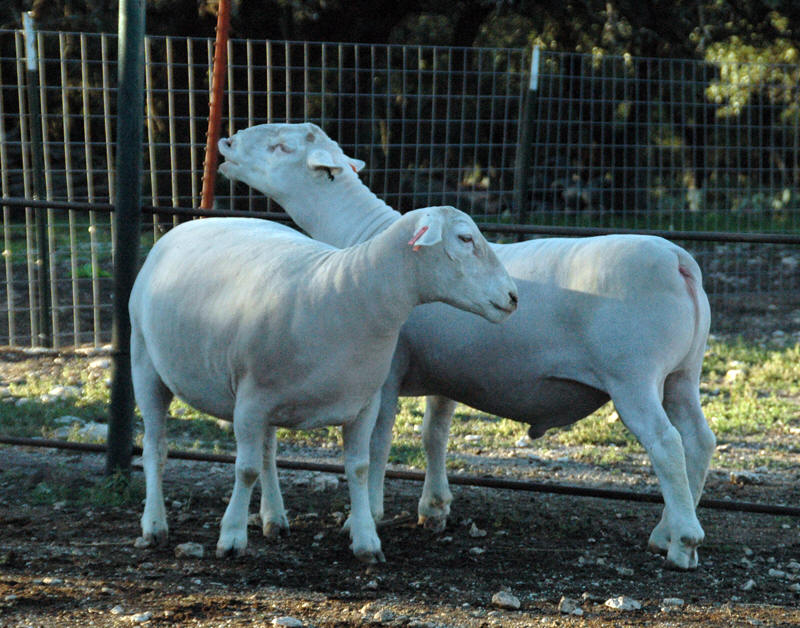
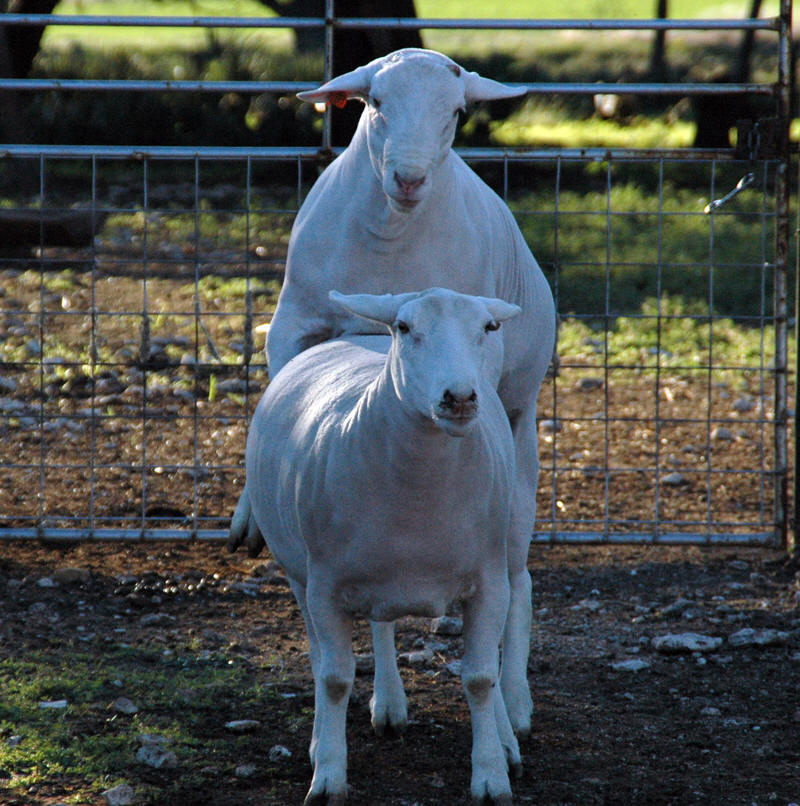
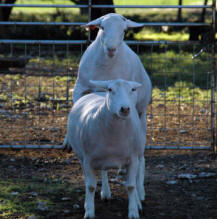
time to reach optimal physical condition. Unmated (“open”) ewes
are receptive to rams every 14 to 19 days (the duration of the
estrus cycle that precedes ovulation). Mating will occur two
or three times over a period of 15 to 45 hours.
 |
 |
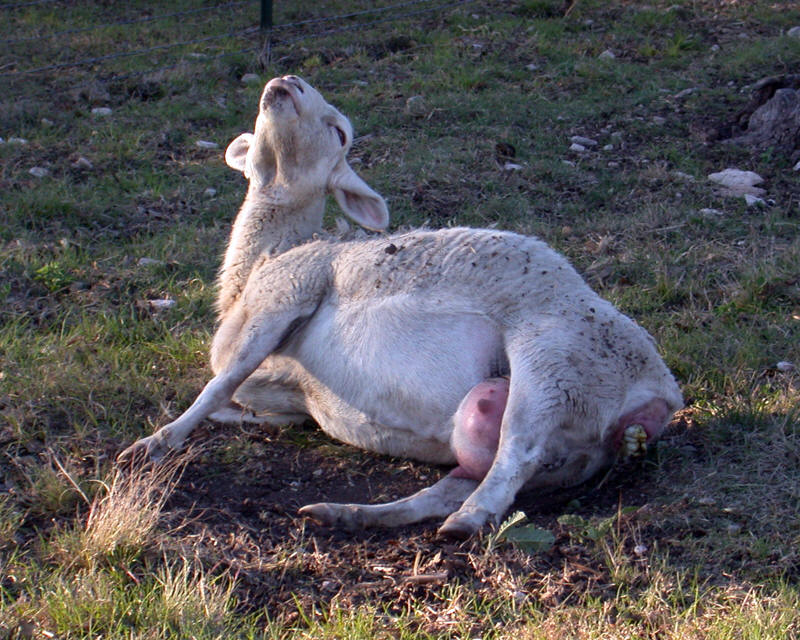
Conception is followed by a
gestation period of 145 to 150 days. Ewes may have anywhere
from one to three lambs per birthing event. Single and twin
lambs are most common but triplets are not rare. Lambs weigh
7-12 pounds at birth.
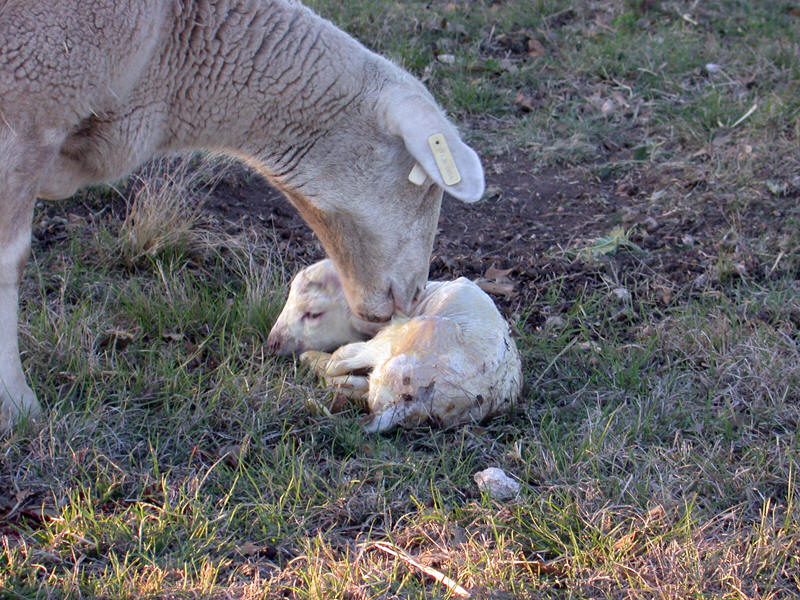
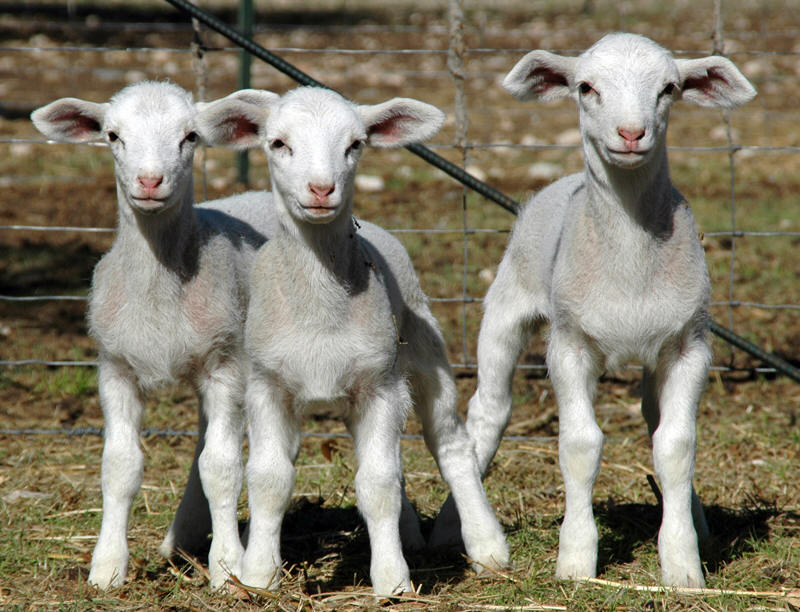
During their first week, newborn
lambs sleep any chance they get. Sometimes they are so sound
asleep they do not hear mama’s call and drive her crazy! They
soon become athletes, learning to run faster and jump higher.
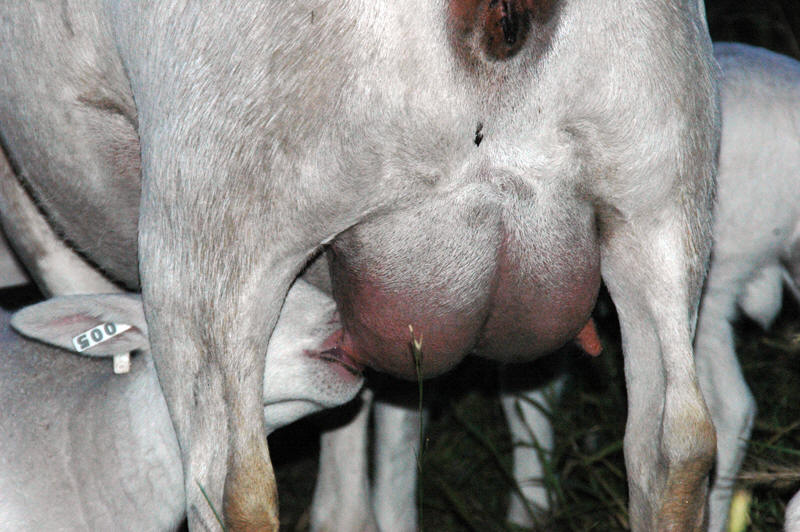
Young lambs are very demanding of their mamas. They need rich
milk as they grow anywhere from 0.5 to 1 pound per day.
Our lambs are usually weaned
when they reach two and a half to three months of age. Individual
weaning age is based on the ewe’s age, the number of offspring,
how much milk the ewe produces and her physical condition during
the first trimester. Our dairy goats sometimes help raising
lambs needing extra milk. We find that fresh goat milk is the
healthiest option for replacement of maternal sheep milk. Twin
County lambs are harvested between six and eight months of age.
If you kept track in months, it takes, under good conditions,
no less than 13 months to put lamb on your table.
Adult sheep can live to eleven
or twelve years of age but not all these are productive years.
Older rams will eventually run out of semen and many lambs will
cause irreparable damage to the udder of the ewes. We retire
these animals to the pasture where they will teach the younger
ones the best spots for acorns in the fall, fresh water and
cool resting places in the summer.
Sheep have very little ability
to defend themselves. In the pasture, grazing flocks need to
be protected from predators. In our area vultures, owls, abandoned
dogs, foxes, coyotes, feral hogs, bobcats and mountain lions
roam for food and love to feast on lamb meat if the right opportunity
presents itself. To help reduce predator attacks on our sheep,
we use guard lamas and livestock guardian dogs.
|