|
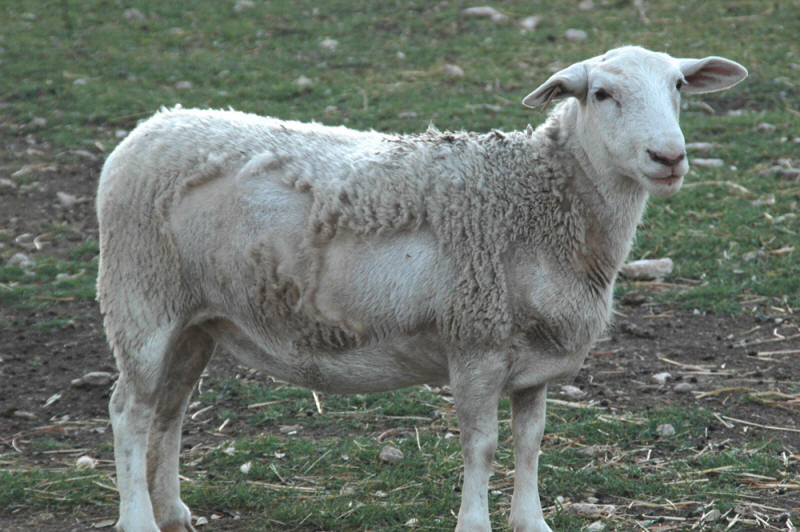
The DORPER
breed was developed in South Africa during the 1930-40s by crossing
the European horned DORset ram to the African Black Headed PERsian
ewe. This breed was born out of the necessity to produce sheep
that would have good meat qualities, yet be able to thrive in
the arid conditions of South Africa. Selection was pursued to
produce top carcass characteristics as well as increased fertility
and lambs that would grow out quickly. These attributes of the
Dorper compliment ranching in Texas. In our region, ranching
can be challenging and environmental conditions can vary considerably
from year to year. These conditions are more suitable for the
production of smaller ruminants, and are particularly well suited
for a breed of sheep developed to thrive under a broad range
of conditions.
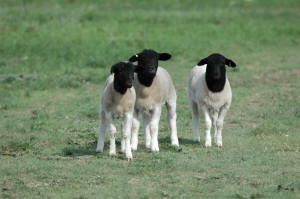 |
The breed was imported
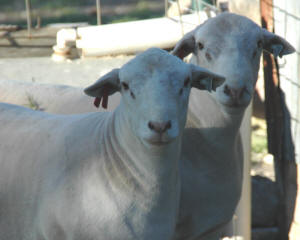
into North America in the mid 1990s. Characteristically,
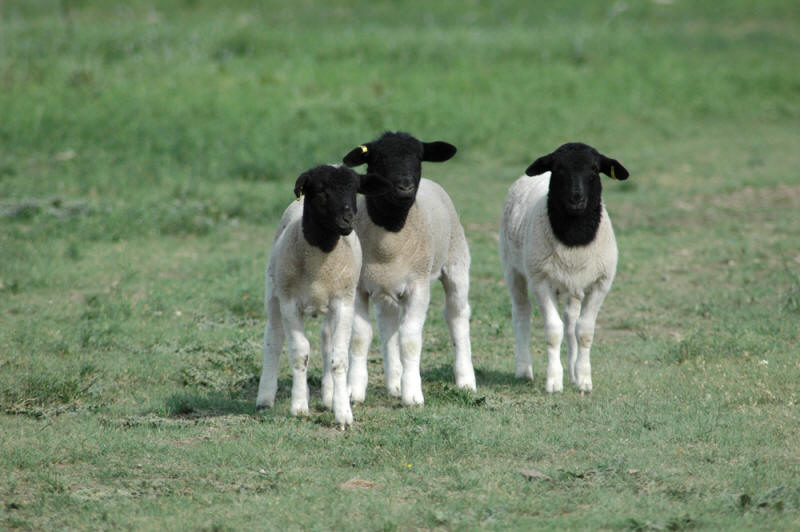
Dorpers are divided into two groups: the “dorpers” exhibit
a black head and neck, |
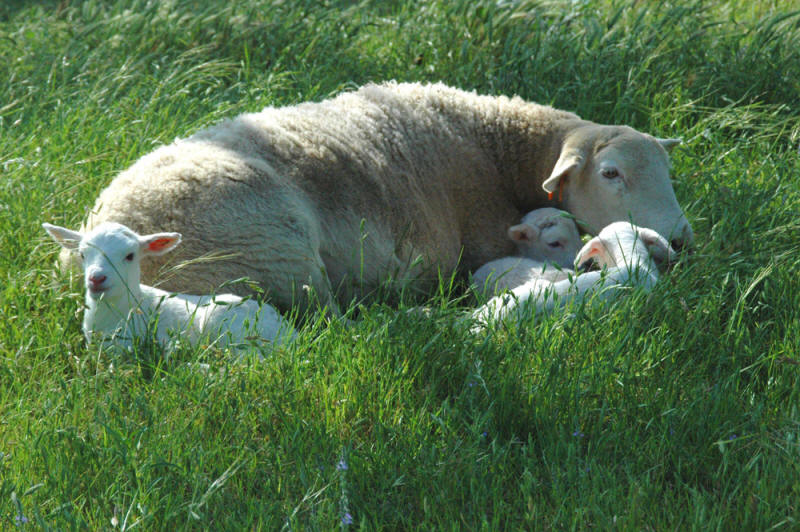
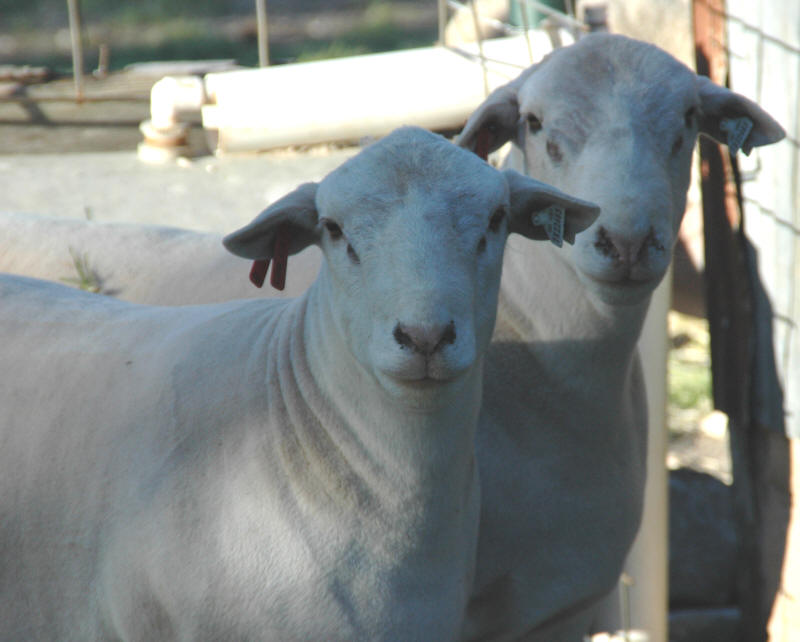
| whereas the “white dorpers”
are entirely white. Despite the fact that they only
differ in color, Dorpers and White Dorpers are maintained
as separate breeds. |
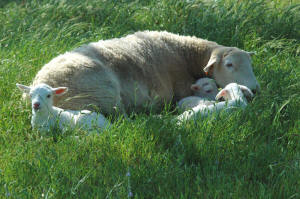 |
Bred for
its lean, tender meat, its broad frame and ideal muscling, the
Dorper is a very good forager, tolerant to a broad range of
conditions, capable of breeding year-round with increased lambing
percentages. Since the Dorper breed is a “meat type” sheep,
breeders can concentrate on meat quality and those breed attributes
that increase profitability.
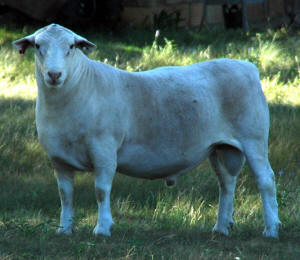
The breed
is particularly well suited for landowners challenged with scheduling
labor for shearing traditional wool breeds since there is usually
not a need to shear the sheep, unless it has been crossed back
with a wool producing breed. Some landowners are using Dorper
sheep to help maintain their properties rather than having to
mow grass and spray weeds. Further details about Dorper breed
standards and common characteristics of this breed can be found
at http://www.dorper.org
and
www.thcdorperassociation.com.
Until the
1990s, the lamb market in North America has only had for its
consumers lamb derived from traditional European wool producing
breeds. These breeds were selected for the dual purpose of producing
wool and meat. In many cases, the latter picks up a distinct
flavor not found in Dorper meat. This led to some consumer criticism
of lamb having a “wooly” taste. In contrast, the Dorper breed
was founded on an industry challenged by a meat product unacceptable
to consumers and therefore bred for carcass attributes which
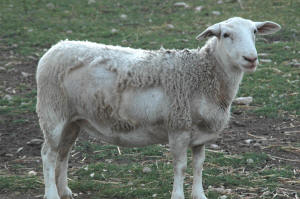
resulted in a meat that is very mild in flavor. This is in part
due to the fact that the Dorper coat is composed primarily of
hair, and to a lesser amount, wool, which is shed as seasonal
temperatures increase.
|